
Blueair
Blue Pure 211+ Auto
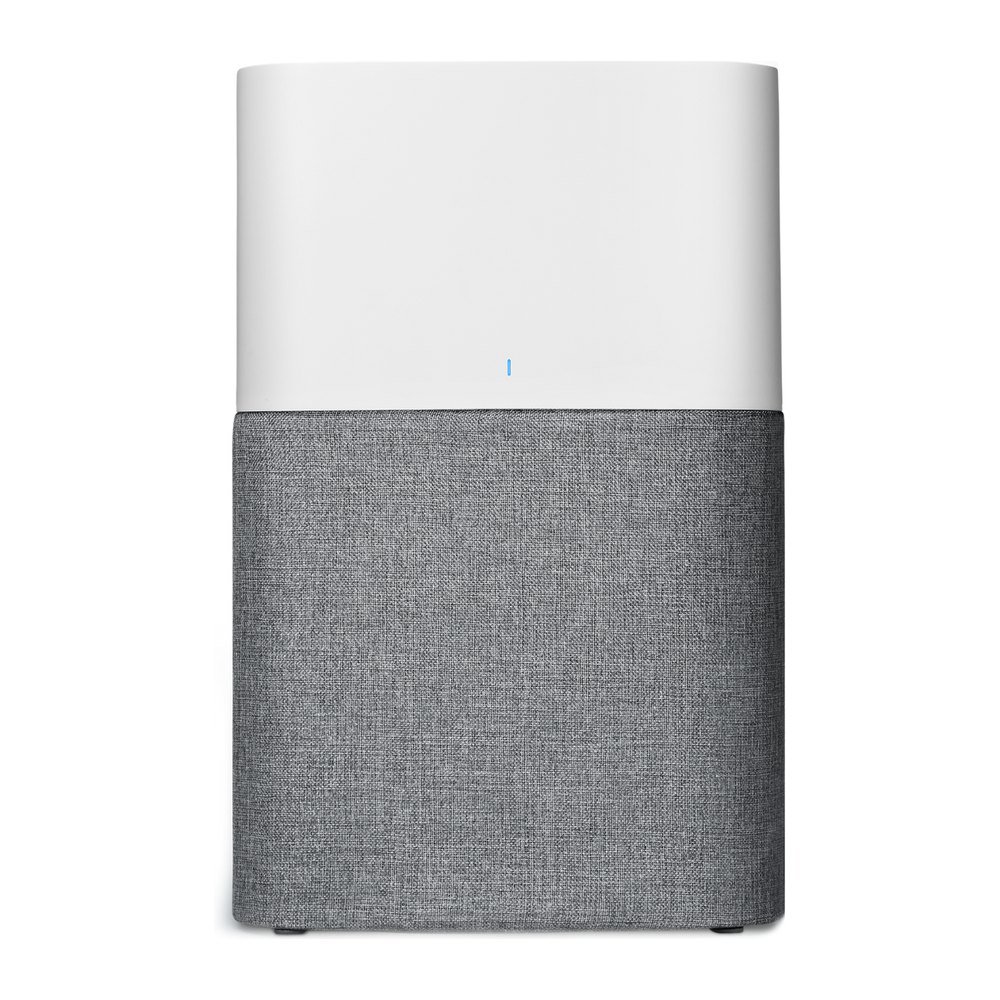
AHAM Verifide at 353 cfm smoke CADR for a 550 sq ft room, and Blueair publishes exactly those numbers rather than a flattering pair — which almost nothing else in this catalogue does. It draws 4 W on its lowest speed.
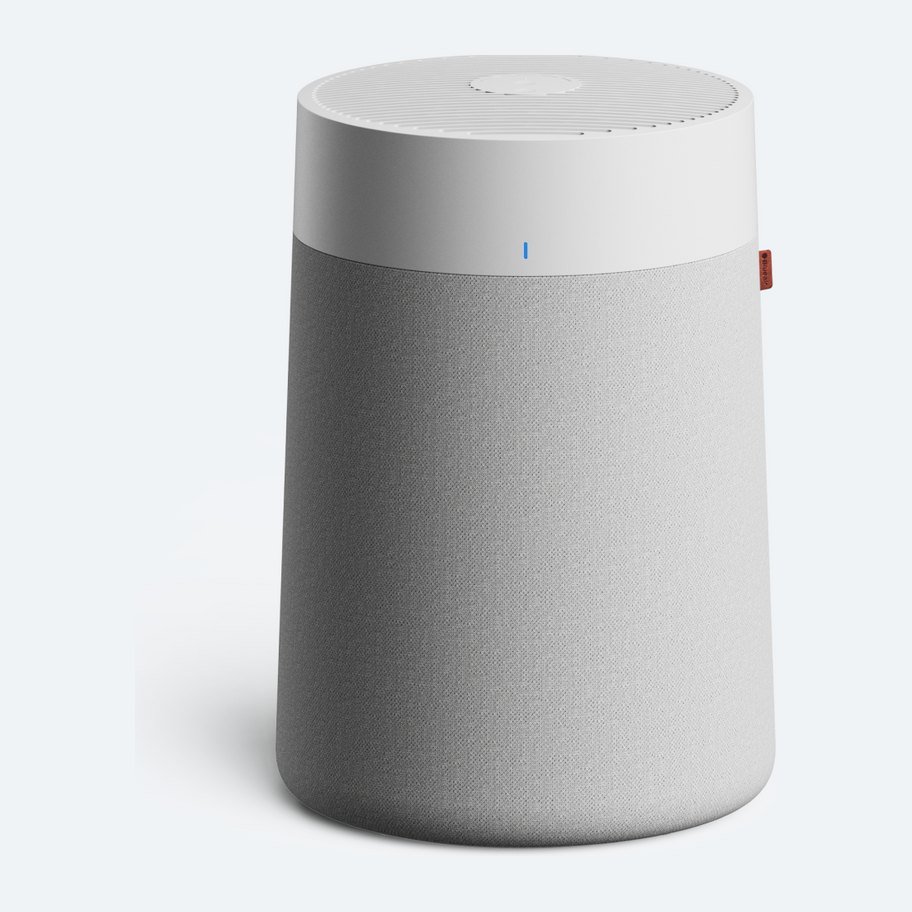
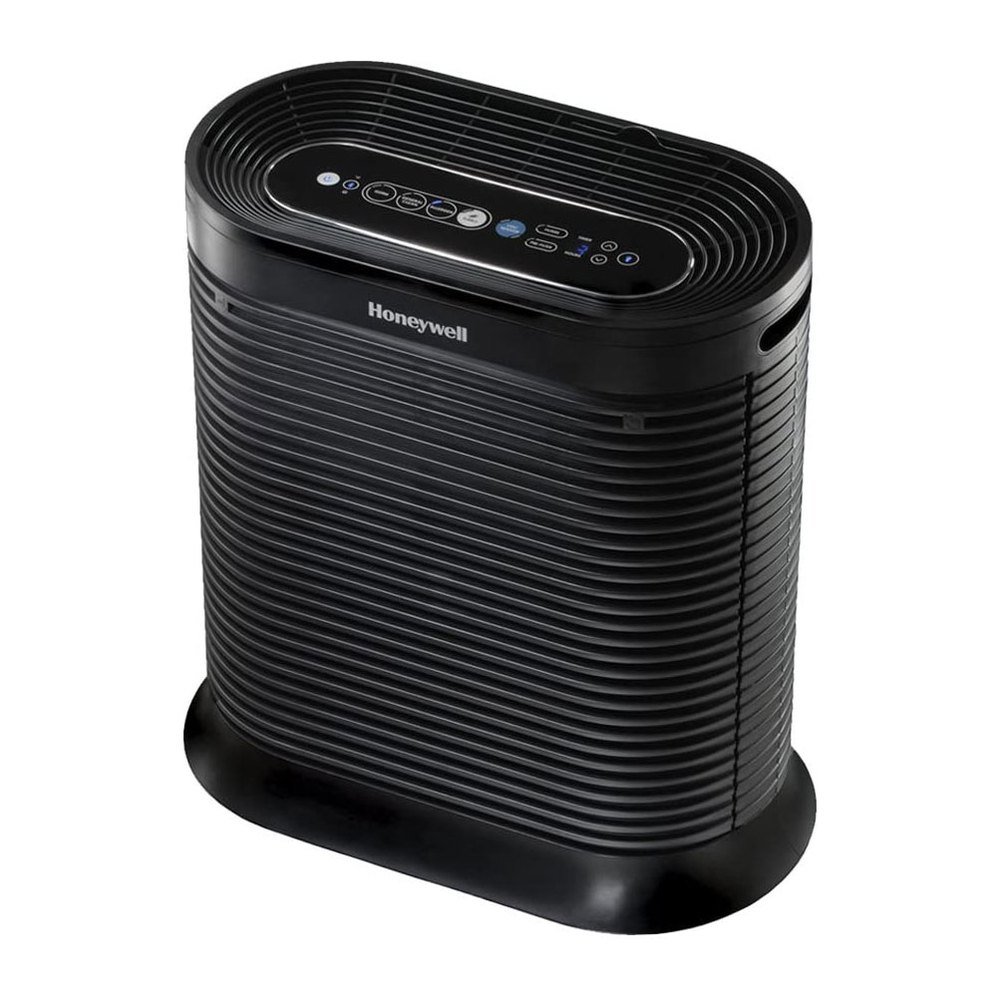
AHAM Verifide at 200 cfm smoke for 310 sq ft, and Honeywell is one of the very few brands that prints the air-change basis next to the room size instead of leaving you to work it out.
Pros
Cons
Verdict
The HPA250B does the thing this site keeps asking manufacturers to do: it states the air-change basis next to the room size, in its own words, and the number holds up. AHAM measures 200 cfm smoke and sizes it at 310 sq ft; Honeywell publishes the same 200, and AHAM's formula produces 310 exactly. CARB has classified it Mechanical twice, a decade apart, and the 2022 revisions did not change that. Three things to weigh. Honeywell publishes no noise figure and no wattage, and AHAM's measured 64.8 watts is high for the clean air delivered. The ENERGY STAR claim on the product page is not supported by the current certified-products list. And the consumables run on two different clocks — two HEPA filters a year plus a pre-filter every three months — which is the real running cost and only half of it is obvious.
Price, seller and package contents change. Check the variant on Amazon before you buy.
Who it's for
Who should skip it
How this coverage figure is stated
4.8 air changes per hour, and Honeywell says so itself: "Independently tested and AHAM Verifide to circulate and filter room air up to 4.8 x per hour in a 310 sq. ft. room." AHAM's directory prints the same 310 sq ft, and AHAM's own rule gives 200 x 1.55 = 310 exactly. Manufacturer, certifier and formula land on the same number, and the manufacturer explains the basis in the same sentence. That is rarer in this category than it should be.
Always compare two purifiers at the same air-change rate; manufacturers pick different ones and the headline square footage is not otherwise comparable.
| Smoke CADR | 200 cfm, AHAM Verifide Honeywell publishes the same 200 |
|---|---|
| AHAM suggested room size | 310 sq ft at 4.8 air changes per hour a basis Honeywell states in its own words |
| CARB | Certified, device type Mechanical, notified 2014-02-11, executive order G-14-019 the V1/V2/V3 revisions are also Mechanical under G-22-456 |
| Noise | Not published. The page says only "Silent operation allows for a quiet air purifier experience" |
| Power | Not published by Honeywell. AHAM recorded 64.8 operating watts during its smoke test |
| Dust CADR | 190 cfm, AHAM Verifide |
| Pollen CADR | 180 cfm, AHAM Verifide its weakest measured figure, which is unusual: on most models here pollen is the strongest |
|---|---|
| Dimensions | 20.32 x 19.37 x 11.54 in |
| Weight | 13.91 lb |
| HEPA filter | Type R HRF-R1, HRF-R2 or HRF-R3. This model takes two. Replace once a year |
| Pre-filter | HRF-AP1 or HRF-APP1, replaced every 3 months a different clock from the HEPA stage |
| Warranty | 5 year limited warranty |
| ENERGY STAR | Honeywell's page says the model has earned the label, but it is not in the current certified-products list see below |
Our calculation, not the manufacturer’s
| Air changes | When you want this rate | Room it suits |
|---|---|---|
| 4.8×/hour | Wildfire smoke, allergy season, a room you are sensitive in | 313 ft² |
| 4×/hour | The rate most allergy guidance assumes | 375 ft² |
| 2×/hour | General freshening in a room without a specific problem | 750 ft² |
Worked from the CDC/NIOSH relation
air changes = (CADR × 60) ÷ (area × ceiling height),
assuming an 8 ft ceiling. Change the ceiling height and these
numbers change. AHAM’s own consumer rule — a smoke CADR of at
least two-thirds of the room’s area — puts the ceiling for this
unit at about 300 ft², which is the same arithmetic
at roughly five air changes an hour.
You can check this at home. In a closed room of the size in the first row, PM2.5 should halve about every nine minutes at top speed once its source stops. A monitor shows whether this unit manages that in your home. How to run the test
Ionizer and ozone
CARB lists it Mechanical, across two separate certifications, and Honeywell states the position plainly.
CARB's complete list carries "Honeywell™ by Kaz | True HEPA Allergen Remover | HPA250B | Mechanical | 2014-02-11 | G-14-019" for the original, and four later rows — HPA250BV1, HPA250BV2, HPA250BV3 and HPA250V2R1 — all Mechanical under G-22-456 from 2022-11-23. The revisions did not change the class, which is not something that can be said of every range in this catalogue.
Mechanical means California's certifier identified no ozone-generating component, so the unit was never subject to the ozone emission test that Electronic devices must pass. Honeywell's own answer on the product page is "No, Honeywell HEPA Air Purifiers use HEPA Filtration that does not release ozone". There is no ionizer and no UV lamp to manage.
| Capability | What it needs | Status |
|---|---|---|
| Particle filtration | Two Type R HEPA filters, pre-installed | Included |
| Odour reduction | Activated carbon pre-filter | Included |
| Bluetooth app control | Bluetooth Smart phone, within range | Included |
| Wi-Fi or remote access | Not offered on this model — the app is Bluetooth only | Not offered |
| Replacement HEPA filters | Two Type R per change, sold separately — HRF-R2 is the matching pack size | Sold separately |
| Replacement pre-filters | HRF-AP1 or HRF-APP1, four a year, sold separately | Sold separately |
| Published noise figure | Not published by Honeywell for this model | Not verified |
Package contents vary by variant and seller. Check what is in the box on the Amazon listing before you buy. “Not verified” means the manufacturer does not document it either way — not that it is missing. “Not offered” is the other thing: the manufacturer does document it, and the answer is that this model does not have it.
Honeywell Type R filter for HPA air purifiers
Part HRF-R3 / HRF-R2 / HRF-R1 / HRF-A300 / HRF-AP1 / HRF-APP1 · Two different clocks, and they are not the same one. Type R (the HEPA stage): "Replace Honeywell HEPA Filters once every year", per the Honeywell Store product page. Filter A (the carbon pre-filter): "Replace Honeywell Pre Filter A every 3 months." That asymmetry is the practical cost of this system and it is the figure to run before buying: an HPA300 consumes three Type R filters a year plus four pre-filters. Honeywell does not publish an hours-per-day assumption behind either interval, so neither can be scaled arithmetically to your own use — watch the pre-filter for visible loading, which on this design is the one you can actually see.
Checked against the AHAM Verifide directory, CARB's certified air-cleaner list, the ENERGY STAR certified-products list and the manufacturer's own pages. We did not test this unit. Nothing here is a measurement of ours: every figure is either documented by the manufacturer or published by an independent standards or testing body, and where the two disagree this page says so.
Blueair
AHAM Verifide at 353 cfm smoke CADR for a 550 sq ft room, and Blueair publishes exactly those numbers rather than a flattering pair — which almost nothing else in this catalogue does. It draws 4 W on its lowest speed.
Blueair
AHAM Verifide at 283 cfm smoke for a 439 sq ft room, and the rare case where the electrostatic question has an actual number attached: ENERGY STAR measured its ozone emission at 2 ppb.
Blueair
A compact tower with an AHAM Verifide smoke CADR of 123 cfm and a 190 sq ft AHAM room size. CARB classifies it Electronic, which is a consequence of how Blueair's HEPASilent works rather than a fault.