
Blueair
DreamWell Humidifier (1 gallon)
EvaporativeOutput not publishedTap water
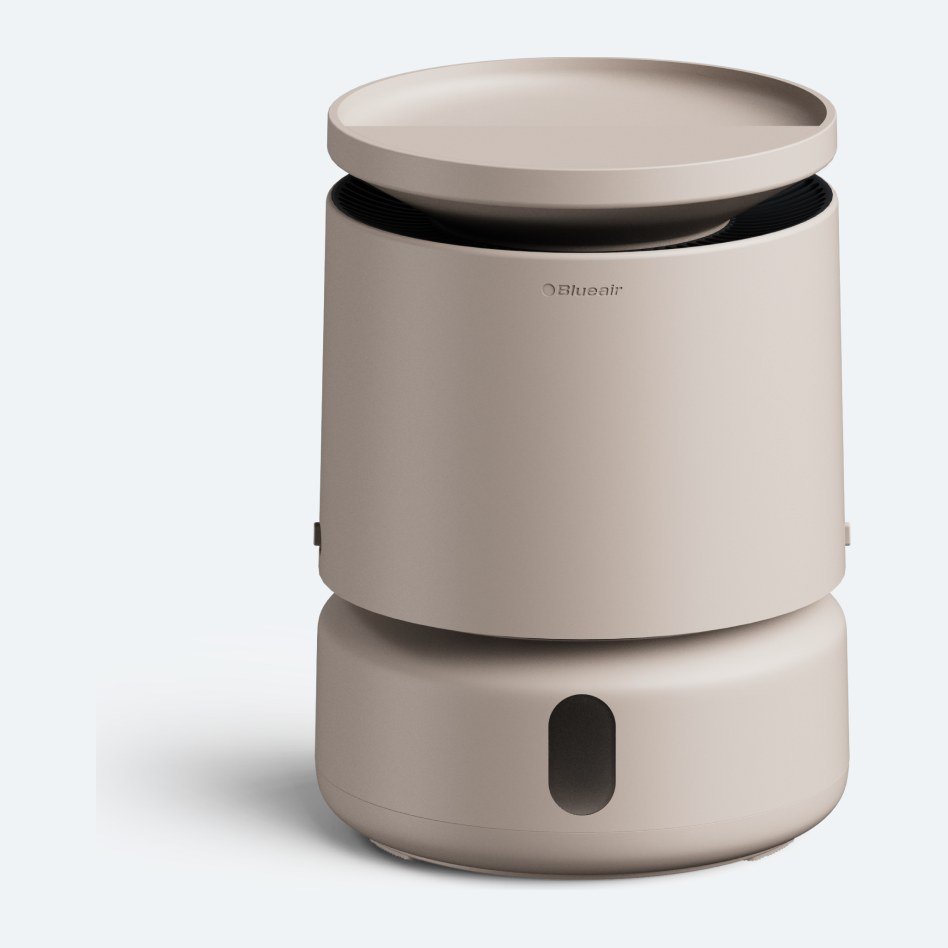
A 1-gallon, mist-free wick humidifier with an aroma stone and app control, rated by Blueair for rooms up to 596 ft².
No public program tests a humidifier’s output or room size. What can be checked is its type, which EPA links to what ends up in the air, the water its own manual asks for, and whether the output it publishes backs the room size it claims.
| Type | How it works | Minerals from the tank |
|---|---|---|
| Evaporative | A fan blows air through a wet wick or filter | Not expected to disperse substantial minerals |
| Steam vaporizer | Heats water into steam; "warm mist" models cool it | Not expected to disperse substantial minerals |
| Ultrasonic | Vibrations break water into a fine mist | Among the types dispersing the most minerals |
| Impeller | A spinning disk throws water into mist | Among the types dispersing the most minerals |
From EPA’s Use and Care of Home Humidifiers. EPA names ultrasonic and impeller models as the types that generally disperse the most minerals and microorganisms, and advises low-mineral water such as distilled for them. A “warm mist” label does not settle the type: some warm-mist models still make their mist ultrasonically, so check the manual.
Blueair
A 1-gallon, mist-free wick humidifier with an aroma stone and app control, rated by Blueair for rooms up to 596 ft².
Levoit
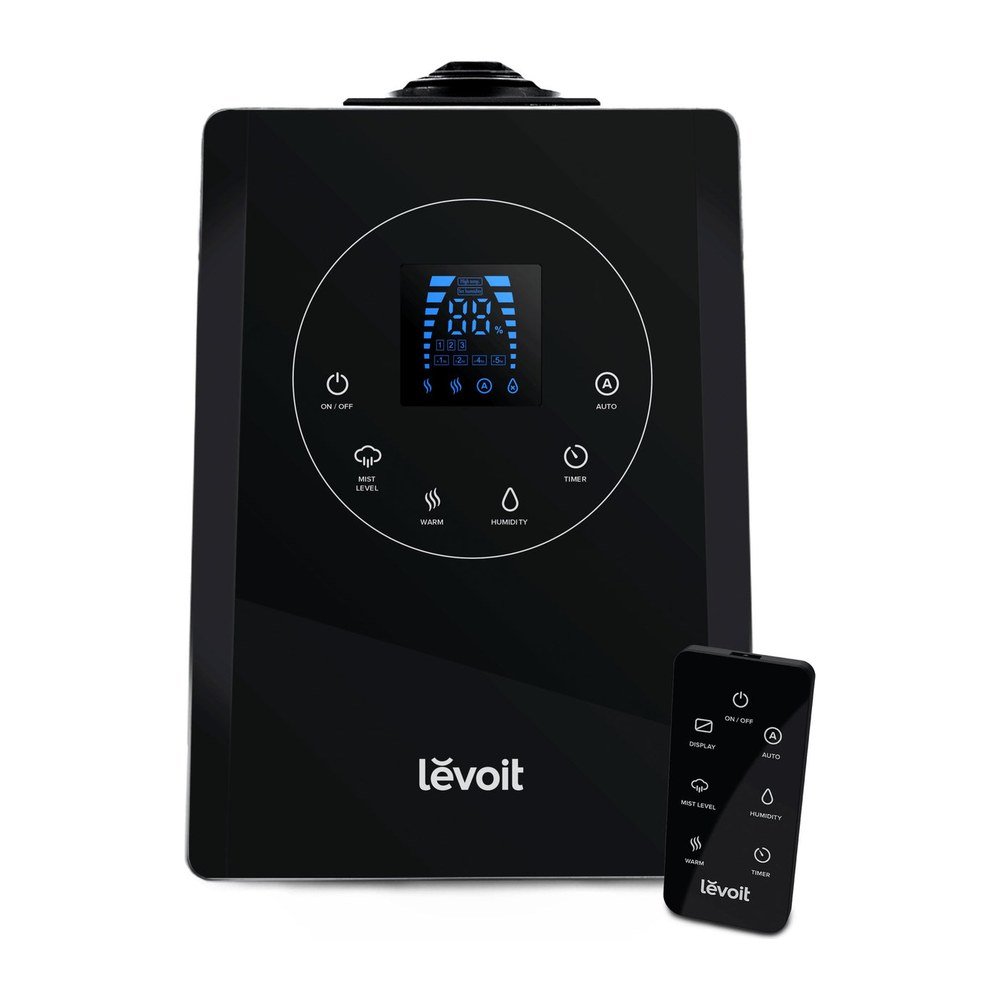
A 6-liter ultrasonic humidifier with an optional warm-mist heater, a remote and a built-in humidity sensor, rated by Levoit for 430–753 ft².
Levoit
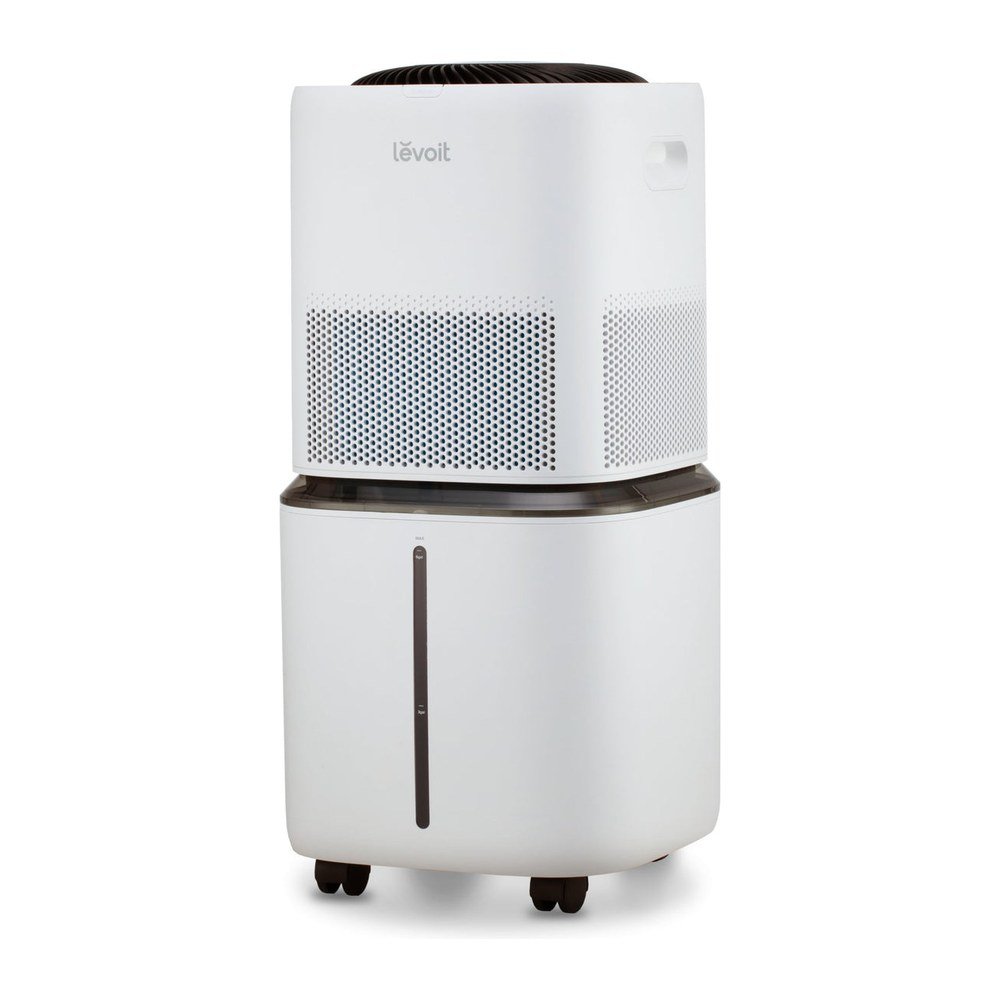
A 6-gallon evaporative humidifier on wheels, with washable wick filters, a tap-water tank and Wi-Fi control, that Levoit rates for up to 3,000 ft².
| Humidifier | Type | Output | Room size claimed | Water |
|---|---|---|---|---|
| Blueair DreamWell Humidifier (1 gallon) | Evaporative | Not published | 596 ft² | Tap |
| Levoit LV600HH | Ultrasonic | 300 mL/h / 500 mL/h | 430–753 ft² | Distilled or purified |
| Levoit Superior 6000S | Evaporative | 1,500 mL/h | 3,000 ft² | Tap |
Measure it
EPA advises against humidifying above 50% and suggests a hygrometer to check. A built-in sensor sits on the humidifier itself; Blueair’s own FAQ warns that readings vary with placement and advises keeping sensors away from the humidifier. A separate monitor across the room gives you the number that matters.
Monitors that also read humidityIn a peer-reviewed bedroom test, an ultrasonic humidifier released particles whose minerals matched the water in its tank, and lower-mineral water produced fewer, smaller particles (Sain et al., Indoor Air, 2018). Their size distributions peaked between 109 and 322 nm, much of that below the 0.3 µm many optical PM2.5 monitors list as their floor, so a monitor may show only part of what the mist carries.
It depends on the type. EPA advises low-mineral water such as distilled for ultrasonic and impeller models, which it says disperse the most minerals, and does not expect evaporative or steam models to disperse substantial minerals. The manual has the final word: Levoit’s LV600HH manual says purified or distilled water only, while Levoit describes filling its evaporative Superior 6000S from the tap.
EPA advises against humidifying above 50%, because higher levels can encourage the growth of biological organisms in the home, and suggests checking with a hygrometer. If water condenses on windows or walls, EPA says to move the humidifier, lower its setting or use it less.
EPA’s guidance for portable humidifiers is to empty and refill the tank daily and clean it every third day, rinsing well after any cleaning agent. Manuals vary: Levoit’s LV600HH manual says to clean every 3 days and change the water every day or two, and its Superior 6000S manual says to clean the tank and change the water every 3 days.
Placement. A sensor on the humidifier can read air it has just humidified, and Blueair’s own FAQ advises keeping humidity sensors away from the humidifier, windows and vents. A separate monitor across the room is the better guide to whether you have passed EPA’s 50% ceiling.